Facebook
 X
X
 Pinterest
 Copy Link
Questions You May Have About Selling Your House


There’s no denying mortgage rates are having a big impact on today’s housing market. And that may leave you with some questions about whether it still makes sense to sell your house and make a move.
Here are three of the top questions you may be asking – and the data that helps answer them.
1. Should I Wait To Sell?
If you’re thinking about waiting to sell until after mortgage rates come down, here’s what you need to know. So are a ton of other people.
And while mortgage rates are still forecasted to come down later this year, if you wait for that to happen, you may be dealing with a lot more competition as other buyers and sellers jump back in too. As Bright MLS says:
“Even a modest drop in rates will bring both more buyers and more sellers into the market.”
That means if you wait it out, you’ll have to deal with things like prices rising faster and more multiple-offer scenarios when you buy your next home.
2. Are Buyers Still Out There?
But that doesn’t mean no one is moving right now. While some people are holding off, there are still plenty of buyers active today. And here’s the data to prove it.
The ShowingTime Showing Index is a measure of how frequently buyers are touring homes. The graph below uses that index to show buyer activity for March (the latest data available) over the past seven years: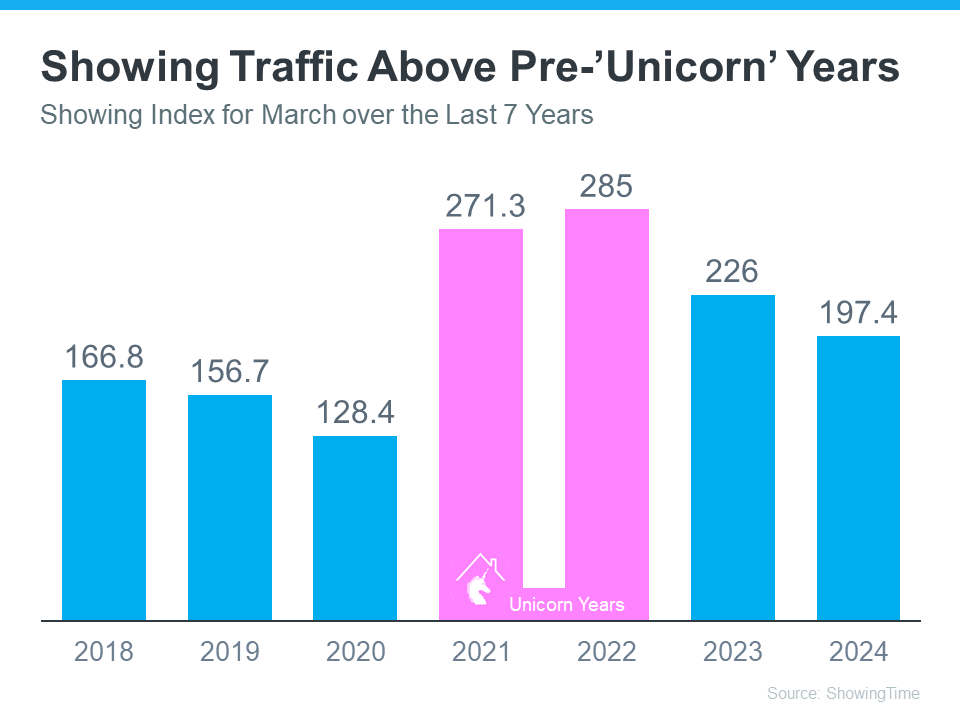
You can see demand has dipped some since the ‘unicorn’ years (shown in pink). That’s in response to a lot of market factors, like higher mortgage rates, rising prices, and limited inventory. But, to really understand today’s demand, you have to compare where we are now with the last normal years in the market (2018-2019) – not the abnormal ‘unicorn’ years.
When you focus on just the blue bars, you can get an idea of how 2024 stacks up. And that gives you a whole new perspective.
Nationally, demand is still high compared to the last normal years in the housing market (2018-2019). And that means there’s still a market for your house to sell.
3. Can I Afford To Buy My Next Home?
And if you’re worried about how you’ll afford your next move with today’s rates and prices, consider this: you probably have more equity in your current home than you realize.
Homeowners have gained record amounts of equity over the past few years. And that equity can make a big difference when you buy your next home. You may even have enough to be an all-cash buyer and avoid taking out a mortgage altogether. As Jessica Lautz, Deputy Chief Economist at the National Association of Realtors (NAR), says:
“ . . . those who have earned housing equity through home price appreciation are the current winners in today’s housing market. One-third of recent home buyers did not finance their home purchase last month—the highest share in a decade. For these buyers, interest rates may be less influential in their purchase decisions.”
Bottom Line
If you’ve had these three questions on your mind and they’ve been holding you back from selling, hopefully, it helps to have this information now. A recent survey from Realtor.com shows more than 85% of potential sellers have been considering selling for over a year. That means there are a number of sellers like you who are on the fence.
But that same survey also talked to sellers who recently decided to take the plunge and list. And 79% of those recent sellers wish they’d sold sooner.
If you want to talk more about any of these questions or need more information, let’s connect.
Should I Wait for Mortgage Rates To Come Down Before I Move?


If you’ve got a move on your mind, you may be wondering whether you should wait to sell until mortgage rates come down before you spring into action. Here’s some information that could help answer that question for you.
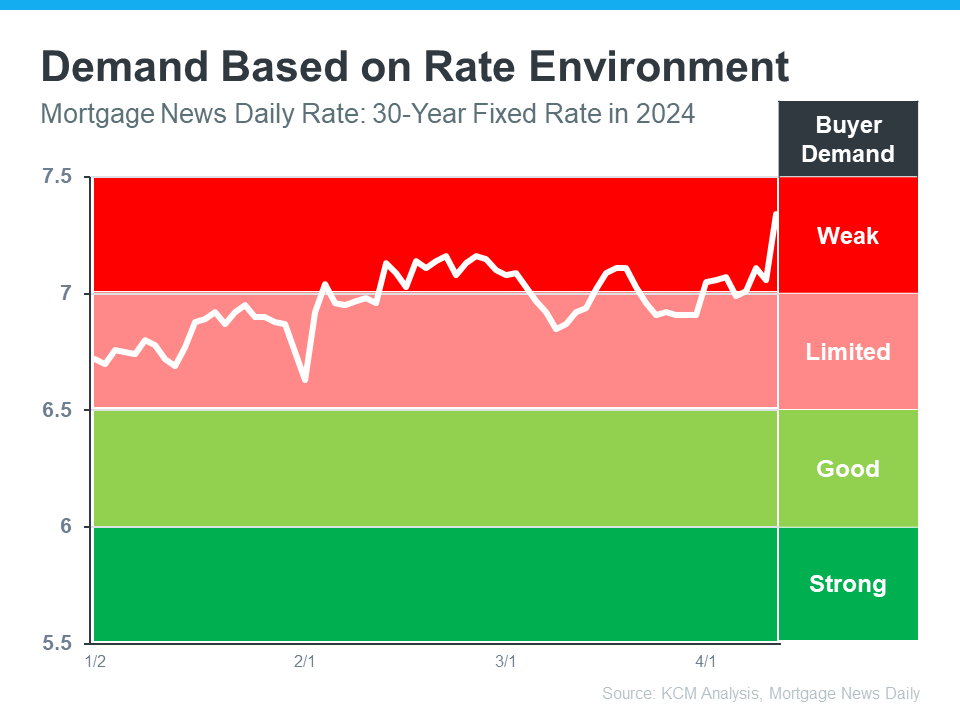
In the housing market, there’s a longstanding relationship between mortgage rates and buyer demand. Typically, the higher rates are, you’ll see lower buyer demand. That’s because some people who want to move will be hesitant to take on a higher mortgage rate for their next home. So, they decide to wait it out and put their plans on hold.
But when rates start to come down, things change. It goes from limited or weak demand to good or strong demand. That’s because a big portion of the buyers who sat on the sidelines when rates were higher are going to jump back in and make their moves happen. The graph below helps give you a visual of how this relationship works and where we are today:
As Lisa Sturtevant, Chief Economist for Bright MLS, explains:
“The higher rates we’re seeing now [are likely] going to lead more prospective buyers to sit out the market and wait for rates to come down.”
Why You Might Not Want To Wait
If you’re asking yourself: what does this mean for my move? Here’s the golden nugget. According to experts, mortgage rates are still projected to come down this year, just a bit later than they originally thought.
When rates come down, more people are going to get back into the market. And that means you’ll have a lot more competition from other buyers when you go to purchase your next home. That may make your move more stressful if you wait because greater demand could lead to an increase in multiple offer scenarios and prices rising faster.
But if you’re ready and able to sell now, it may be worth it to get ahead of that. You have the chance to move before the competition increases.
Bottom Line
If you’re thinking about whether you should wait for rates to come down before you move, don’t forget to factor in buyer demand. Once rates decline, competition will go up even more. If you want to get ahead of that and sell now, let’s chat.
Why Overpricing Your House Can Cost You


If you’re trying to sell your house, you may be looking at this spring season as the sweet spot – and you’re not wrong. We’re still in a seller’s market because there are so few homes for sale right now. And historically, this is the time of year when more buyers move, and competition ticks up. That makes this an exciting time to put up that for sale sign.
But while conditions are great for sellers like you, you’ll still want to be strategic when it comes time to set your asking price. That’s because pricing your house too high may actually cost you in the long run.
The Downside of Overpricing Your House
The asking price for your house sends a message to potential buyers. From the moment they see your listing, the price and the photos are what’s going to make the biggest first impression. And, if it’s priced too high, you may turn people away. As an article from U.S. News Real Estate says:
“Even in a hot market where there are more buyers than houses available for sale, buyers aren’t going to pay attention to a home with an inflated asking price.”
That’s because no homebuyer wants to pay more than they have to, especially not today. Many are already feeling the pinch on their budget due to ongoing home price appreciation and today’s mortgage rates. And if they think your house is overpriced, they may write it off without even stepping foot in the front door, or simply won’t make an offer if they think it’s priced too high.
If that happens, it’s going to take longer to sell. And ideally you don’t want to have to think about doing a price drop to try to re-ignite interest in your house. Why? Some buyers will see the price cut as a red flag and wonder why the price was reduced, or they’ll think something is wrong with the house the longer it sits. As an article from Forbes explains:
“It’s not only the price of an overpriced home that turns buyers off. There’s also another negative component that kicks in. . . . if your listing just sits there and accumulates days on the market, it will not be a good look. . . . buyers won’t necessarily ask anyone what’s wrong with the home. They’ll just assume that something is indeed wrong, and will skip over the property and view more recent listings.”
Your Agent’s Role in Setting the Right Price
Instead, pricing it at or just below current market value from the start is a much better strategy. So how do you find that ideal asking price? You lean on the pros. Only an agent has the expertise needed to research and figure out the current market value for your home.
They’ll factor in the condition of your house, any upgrades you’ve made, and what other houses like yours are selling for in your area. And they’ll use all of that information to find that target number. The right price will bring in more buyers and make it more likely you’ll see multiple offers too. Plus, when homes are priced right, they still tend to sell quickly.
Bottom Line
Even though you want to bring in top dollar when you sell, setting the asking price too high may deter buyers and slow down the sales process.
Let’s connect to find the right price for your house, so we can maximize your profit and still draw in eager buyers willing to make competitive offers.
4 Tips To Make Your Strongest Offer on a Home
Are you thinking about buying a home soon? If so, you should know today’s market is competitive in many areas because the number of homes for sale is still low – and that’s leading to multiple-offer scenarios. And moving into the peak homebuying season this spring, this is only expected to ramp up more.
Remember these four tips to make your best offer.
1. Partner with a Real Estate Agent
Rely on a real estate agent who can support your goals. As PODS notes:
“Making an offer on a home without an agent is certainly possible, but having a pro by your side gives you a massive advantage in figuring out what to offer on a house.”
Agents are local market experts. They know what’s worked for other buyers in your area and what sellers may be looking for. That advice can be game changing when you’re deciding what offer to bring to the table.
2. Understand Your Budget
Knowing your numbers is even more important right now. The best way to understand your budget is to work with a lender so you can get pre-approved for a home loan. Doing so helps you be more financially confident and shows sellers you’re serious. That gives you a competitive edge. As Investopedia says:
“. . . sellers have an advantage because of intense buyer demand and a limited number of homes for sale; they may be less likely to consider offers without pre-approval letters.”
3. Make a Strong, but Fair Offer
It’s only natural to want the best deal you can get on a home, especially when affordability is tight. However, submitting an offer that’s too low does have some risks. You don’t want to make an offer that’ll be tossed out as soon as it’s received just to see if it sticks. As Realtor.com explains:
“. . . an offer price that’s significantly lower than the listing price, is often rejected by sellers who feel insulted . . . Most listing agents try to get their sellers to at least enter negotiations with buyers, to counteroffer with a number a little closer to the list price. However, if a seller is offended by a buyer or isn’t taking the buyer seriously, there’s not much you, or the real estate agent, can do.”
The expertise your agent brings to this part of the process will help you stay competitive and find a price that’s fair to you and the seller.
4. Trust Your Agent During Negotiations
After you submit your offer, the seller may decide to counter it. When negotiating, it’s smart to understand what matters to the seller. Once you do, being as flexible as you can on things like moving dates or the condition of the house can make your offer more attractive.
Your real estate agent is your partner in navigating these details. Trust them to lead you through negotiations and help you figure out the best plan. As an article from the National Association of Realtors (NAR) explains:
“There are many factors up for discussion in any real estate transaction—from price to repairs to possession date. A real estate professional who’s representing you will look at the transaction from your perspective, helping you negotiate a purchase agreement that meets your needs . . .”
Bottom Line
In today’s competitive market, let’s work together to find you a home you love and craft a strong offer that stands out.
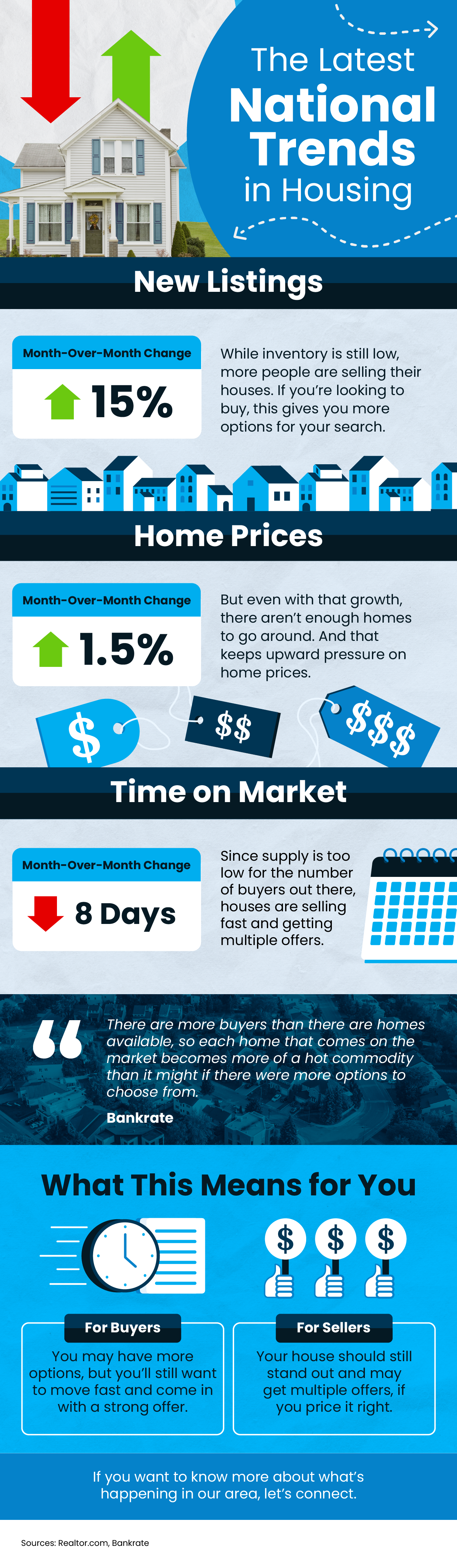
The Latest Trends in Housing
Some Highlights
- With the number of new listings going up and average days on market going down, buyers may have more options, but will still want to move fast.
- For sellers, inventory is still low and houses are selling fast, meaning your house should stand out and may get multiple offers if you price it right.
- If you want to know more about what’s happening in our area, let’s connect.
Why Today’s Seller’s Market Is Good for Your Bottom Line


Thinking about selling your house and wondering if now’s a good time to do it? Here’s what you need to know. Even though the number of homes for sale has been growing this year, there still aren’t enough homes on the market for all the buyers who want to buy.
So, what does that mean for you? To keep it simple, it means it’s still a seller’s market. Here’s how it works:
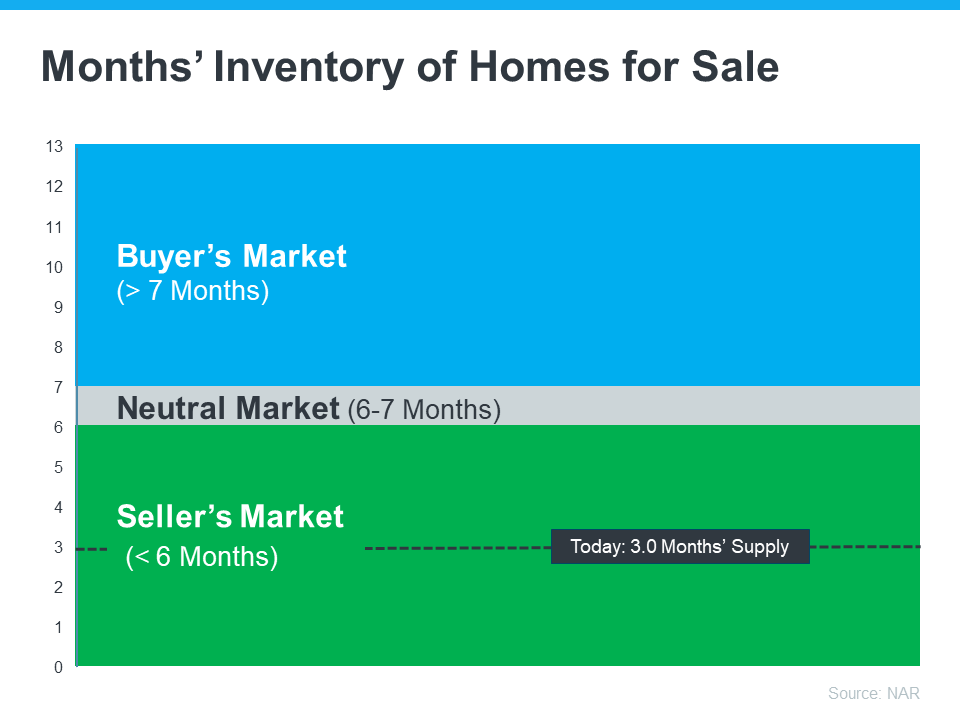
- A neutral market is when supply and demand is balanced. Basically, there are enough homes to meet buyer demand based on the current sales pace, and home prices hold fairly steady.
- A buyer’s market is when there are more homes for sale than there are buyers. When that happens, buyers have more negotiation power because sellers are willing to make compromises to close the deal. In a buyer’s market, sellers may have to do price cuts to re-ignite interest in their home, and prices may go down. But we haven’t seen this for years since there are so few homes available to buy.
- In a seller’s market, it’s just the opposite. When the supply of homes for sale is as low as it is right now, it’s much harder for buyers to find homes to purchase. That creates increased competition among purchasers which can lead to more bidding wars. And if buyers know they may be entering a bidding war, they’re going to do their best to submit a very attractive offer upfront. This could drive the final sale price of your house up.
The graph below uses data from the National Association of Realtors to show just how deep into seller’s market territory we still are today:
What Does This Mean for You?
The market is still working in your favor. If you lean on an agent for advice on how to get your house list ready and how to price it competitively, it should get a lot of attention from eager buyers. That means you’ll likely get multiple offers and see your house sell quickly and for top dollar. As a recent article from Ramsey Solutions explains:
“A seller’s market is when demand for homes is higher than the supply of homes. And that’s still the case right now. If you’re planning to sell your house, you can expect to sell it fairly quickly for close to your asking price—as long as your asking price is realistic for the current market.”
Bottom Line
Today’s housing market still favors sellers. If you’re ready to sell your house, let’s connect so you can start making your moves.
Why Pre-Approval Is Your Homebuying Game Changer


If you’re thinking about buying a home, pre-approval is a crucial part of the process you definitely don’t want to skip. So, before you start picturing yourself in your new living room or dining on your future all-season patio, be sure you’re working with a trusted lender to prioritize this essential step. Here’s why.
While home price growth is moderating and mortgage rates have been coming down in recent weeks, affordability is still tight. At the same time, there’s a limited number of homes for sale right now, and that means ongoing competition among hopeful buyers. But, if you’re strategic, there are ways to navigate these waters – and pre-approval is the game changer.
What Pre-Approval Does for You
To understand why it’s such an important step, you need to know more about pre-approval. As part of the homebuying process, a lender looks at your finances to determine what they’re willing to loan you. From there, your lender will give you a pre-approval letter to help you understand how much money you can borrow. Freddie Mac explains it like this:
“A pre-approval is an indication from your lender that they are willing to lend you a certain amount of money to buy your future home. . . . Keep in mind that the loan amount in the pre-approval letter is the lender’s maximum offer. Ultimately, you should only borrow an amount you are comfortable repaying.”
Getting pre-approved starts to put you in the mindset of seeing the bigger financial picture, one step at a time. And the key is actually more than just getting a pre-approval letter from your lender. The combination of pre-approval and strategic budgeting is your golden ticket to understanding what you can actually afford. It saves you from painful heartaches down the road so you don’t fall in love with a house that might be out of reach.
Pre-Approval Helps Show Sellers You’re a Serious Buyer
But that’s just the beginning. Let’s face it, there are more people looking to buy than there are homes available for sale, and that creates competition among homebuyers. That means you could see yourself in a multiple-offer scenario when you get ready to make your move. But getting pre-approved for a mortgage can help you stand out from other buyers.
In today’s fast-moving housing market, having that pre-approval in your back pocket can be your secret weapon. When sellers see you’re pre-approved, it tells them you’re a strategic and serious buyer. In a world of multiple offers, that’s a big deal. As an article from the Wall Street Journal (WSJ) says:
“If you plan to use a mortgage for your home purchase, preapproval should be among the first steps in your search process. Not only can getting preapproved help you zero in on the right price range, but it can give you a leg up on other buyers, too.”
Pre-approval shows sellers you’re more than just a window shopper. You’re a buyer who’s already undergone a credit and financial check, making it more likely that the sale will move forward without unexpected delays or issues. Sellers love that because they see your offer as a reliable one. A win-win, right?
Bottom Line
So, before you start mentally arranging furniture in your dream home, work with a trusted lender to get your pre-approval set. It’ll save you time, stress, and a lot of headaches that could come up along the way without it. The reality is, the more prepared you are, the more likely you are to land the home you’re longing for.
The Perks of Selling Your House When Inventory Is Low


When it comes to selling your house, you’re probably trying to juggle the current market conditions and your own needs as you plan your move.
One thing that may be working in your favor is how few homes there are for sale right now. Here’s what you need to know about the current inventory situation and what it means for you.
The Supply of Homes for Sale Is Far Below the Norm
When you’re selling something, it helps if what you’re selling is in demand, but is also in low supply. Why? That makes it even more desirable since there’s not enough to go around. That’s exactly what’s happening in the housing market today. There are more buyers looking to buy than there are homes for sale.
To tell the story of just how low inventory is, here’s the latest information on active listings, or homes available for sale. The graph below uses data from Realtor.com to show how many active listings there were in September of this year compared to what’s more typical in the market.

As you can see in the graph, if you look at the last normal years for the market (shown in the blue bars) versus the latest numbers for this year (shown in the red bar), it’s clear inventory is still far lower than the norm.
What That Means for You
Buyers have fewer choices now than they did in more typical years. And that’s why you could still see some great perks if you sell today. Because there aren’t enough homes to go around, homes that are priced right are still selling fast and the average seller is getting multiple offers from eager buyers. Based on the latest data from the Confidence Index from the National Association of Realtors (NAR):
- 69% of homes sold in less than a month.
- 2.6 offers: the average number of offers on recently sold homes.
An article from Realtor.com also explains how the limited number of houses for sale benefits you if you’re selling:
“. . . homes spent two weeks less on the market this past month than they did in the average September from 2017 to 2019 . . . as still-limited supply spurs homebuyers to act quickly . . .”
Bottom Line
Because the supply of homes for sale is so low, buyers desperately want more options – and your house may be just what they’re looking for. Let’s connect to get your house listed at the right price for today’s market. You could still see it sell quickly and potentially get multiple offers.