Facebook
 X
X
 Pinterest
 Copy Link
The Dramatic Impact of Homeownership on Net Worth

If you’re trying to decide whether to rent or buy a home this year, here’s a powerful insight that could give you the clarity and confidence you need to make your decision.
Every three years, the Federal Reserve releases the Survey of Consumer Finances (SCF), which compares net worth for homeowners and renters. The latest report shows the average homeowner’s net worth is almost 40X greater than a renter’s (see graph below):
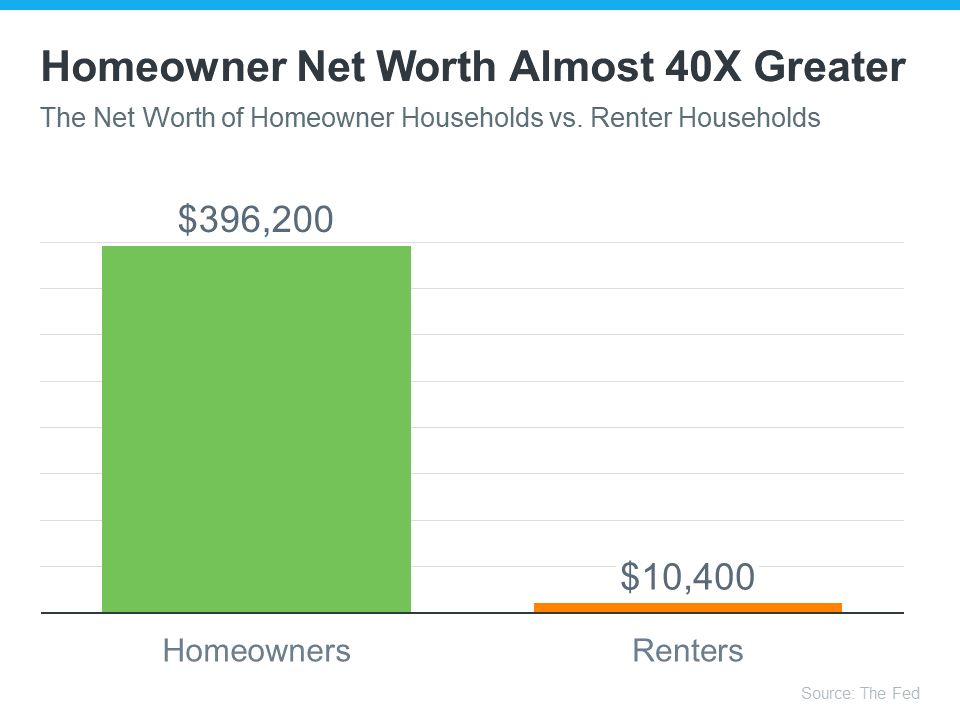
One reason a wealth gap exists between renters and homeowners is because when you’re a homeowner, your equity grows as your home appreciates in value and you make your mortgage payment each month. When you own a home, your monthly mortgage payment acts like a form of forced savings, which eventually pays off when you decide to sell. As a renter, you’ll never see a financial return on the money you pay out in rent every month. Ksenia Potapov, Economist at First American, explains it like this:
“Renters don’t capture the wealth generated by house price appreciation, nor do they benefit from the equity gains generated by monthly mortgage payments . . .”
The Largest Part of Most Homeowner Net Worth Is Their Equity
Home equity does more to build the average household’s wealth than anything else. According to data from First American and the Federal Reserve, this holds true across different income levels (see graph below):
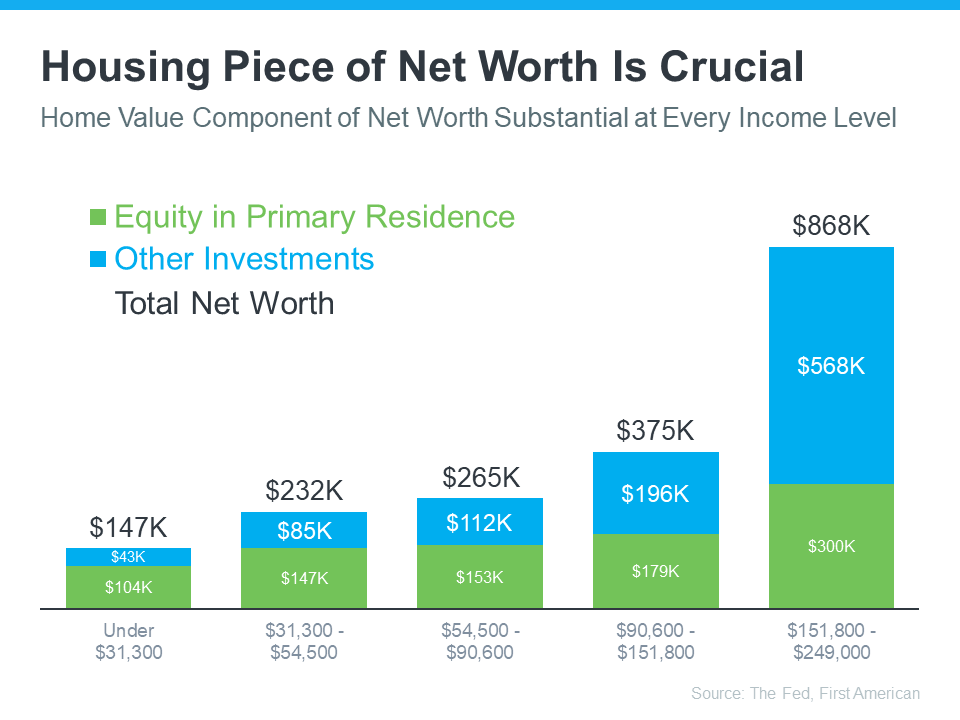
The green segment in each bar represents how much of a homeowner’s net worth comes from their home equity. Based on this data, it’s clear no matter what your income level is, owning a home can really boost your wealth. Nicole Bachaud, Senior Economist at Zillow, shares:
“The biggest asset most people are ever going to own is a home. Homeownership is really that financial key that helps unlock stability and wealth preservation across generations.”
If you’re ready to start building your net worth, the current real estate market offers several opportunities you should consider. For example, with mortgage rates trending lower lately, your purchasing power may be higher now than it has been in months. And, with more inventory coming to the market, there are more options for you to consider. A local real estate agent can walk you through the opportunities you have today and guide you through the process of finding your ideal home.
Bottom Line
If you’re unsure about whether to rent or buy a home, keep in mind that owning a home can increase your overall wealth in the long run, no matter your income. To discover more about this and the many other benefits of homeownership, let’s connect.
Sell Smarter: Why Working with a Real Estate Agent May Beat Going Solo

If you’re thinking about selling your house on your own, called “For Sale by Owner” or FSBO, there are some important things to consider. Going this route means taking on a lot of responsibilities by yourself – and that can be a bit of a headache.
A recent report from the National Association of Realtors (NAR) found two of the most difficult tasks for people who sell their house on their own are getting the price right and understanding and performing paperwork.
Here are just a few of the ways an agent helps with those difficult tasks.
Getting the Price Right
Setting the right price for your house is important when you’re trying to sell it. If you’re selling your house on your own, two common issues can happen. For starters, you might ask for too much money (overpricing). Alternatively, you might not ask for enough (underpricing). Either can make it hard to sell your house. According to NerdWallet:
“When selling a home, first impressions matter. Your house’s market debut is your first chance to attract a buyer and it’s important to get the pricing right. If your home is overpriced, you run the risk of buyers not seeing the listing.
. . . But price your house too low and you could end up leaving some serious money on the table. A bargain-basement price could also turn some buyers away, as they may wonder if there are any underlying problems with the house.”
To avoid these problems, it’s a good idea to team up with a real estate agent. Real estate agents know how to figure out the perfect price because they understand the local housing market. They can use their expertise to set a price that matches what buyers are willing to pay, giving your house the best chance to impress from the start.
Understanding and Performing Paperwork
Selling a house involves a bunch of paperwork and legal documentation that has to be just right. There are a lot of rules and regulations to follow, making it a bit tricky for homeowners to manage everything on their own. Without a pro by your side, you could end up facing liability risks and legal complications.
Real estate agents are experts in all the contracts and paperwork needed for selling a house. They know the rules and can guide you through it all, reducing the chance of mistakes that might lead to legal problems or delays.
So, instead of dealing with the growing pile of documents on your own, team up with an agent who can be your advisor, helping you avoid any legal bumps in the road.
Bottom Line
Selling your house is a big deal, and it can be complicated. Having a real estate agent can make a huge difference with setting the right price and managing all the details, so you can sell confidently. Let’s connect to make the process smooth and take the stress off your plate.
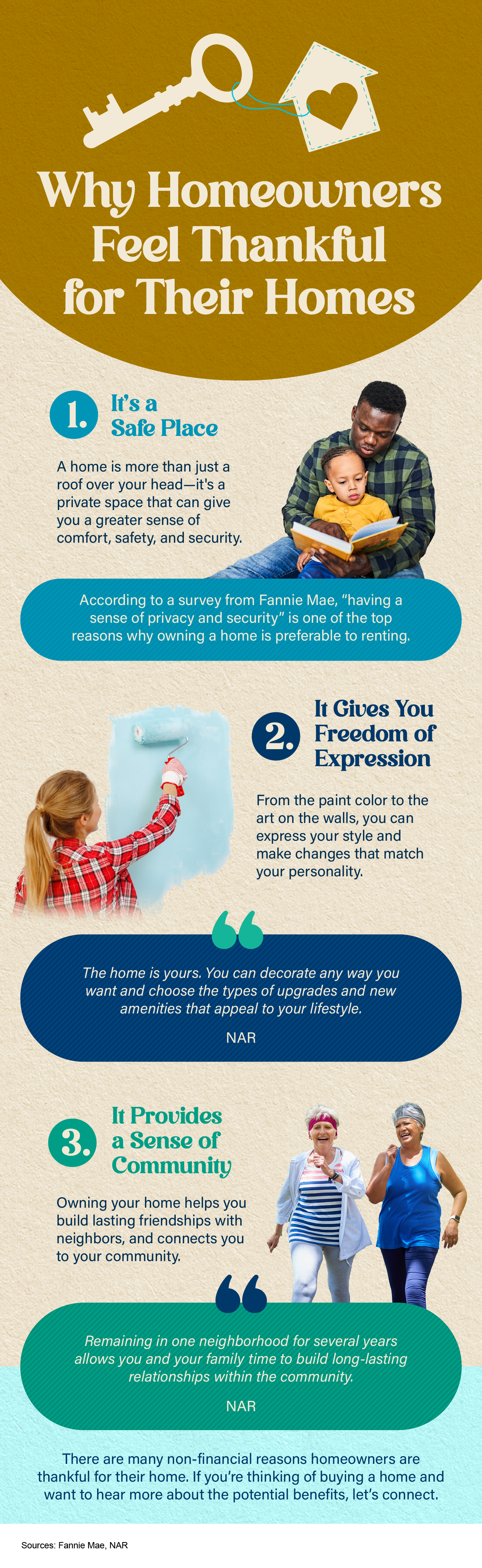
Why Homeowners Feel Thankful for Their Homes [INFOGRAPHIC]


Some Highlights
- Here are three reasons why homeowners feel thankful for their homes. First, it’s a safe place that can give you a greater sense of comfort, safety, and security.
- Second, it gives you freedom of expression. From the color of the paint to the art on the walls, you can express your style and your personality.
- Third, it provides a sense of community. Owning your home helps you build lasting friendships with neighbors and connects you to your community. If you’re thinking of buying a home and want to hear more about the potential benefits, let’s talk.
Why Homeowners Are Thankful They Own


Countless people have set out on the exciting journey of homeownership. Ask around and you’ll find the vast majority are thankful they took the leap and bought a home. But why? It’s because of the many emotional and lifestyle benefits that come with being a homeowner.
So, if you’re trying to decide if you want to rent or buy a home, here are just a few of the many benefits you could look forward to if you buy.
It’s a Safe Haven
Owning a home goes beyond just having a roof over your head. It provides a sense of security and safety. In fact, in a survey from Fannie Mae, respondents say “having a sense of privacy and security” is one of the top reasons homeownership is preferred to renting. And in a different Fannie Mae survey, “living in a place where you and your family feels safe” is another one of the top benefits of homeownership.
Your home is a place where you can truly relax and unwind. Knowing that you have a sanctuary to return to at the end of the day is a great source of comfort.
It’s a Canvas for Self-Expression
For many homeowners, their home is a reflection of who they are. The National Association of Realtors (NAR), says:
“The home is yours. You can decorate any way you want and choose the types of upgrades and new amenities that appeal to your lifestyle.”
From the color of the front door to the art hanging on the walls, every detail contributes to a unique expression of personal style. Put simply, owning a home gives you the freedom to make changes and improvements that resonate with your personality.
It Helps You Feel More Connected to the Community
Stability is another cornerstone of homeownership. The longer you stay put, the more emotionally connected you are to your community. For example, if your neighborhood does cook-outs, block parties, or other events, you’ll feel more engaged and probably build meaningful relationships with those around you. As NAR states:
“Remaining in one neighborhood for several years allows you and your family time to build long-lasting relationships within the community.”
The sense of community where you can make life-long friends helps give you more stability and predictability than you’d have if you move each time a rental lease renews.
Its Where Lifelong Memories Are Made
Not to mention, your home is where you’ll make many memories. It’s a backdrop for the stories of your life. Celebrating milestones, hosting gatherings, and building a treasure trove of special moments within the walls of your home is a heartwarming experience to be thankful for.
Bottom Line
As you start thinking about buying a home, remember why so many people are glad they did. Homeownership isn’t just a financial decision. It’s about having a stable place where you can make lasting memories. If you’re thinking of buying a home and want advice, let’s chat.
Is Your House the Top Thing on a Buyer’s Wish List this Holiday Season?

This time every year, homeowners who are planning to move have a decision to make: sell now or wait until after the holidays? Some sellers with homes already on the market may even remove their listing until the new year.
But the truth is, many buyers want to purchase a home for the holidays, and your house might be just what they’re looking for. As an article from Fortune Builders explains:
“ . . . while a majority of people take a step back from the real estate market during the holiday months, you may find when the temperature drops, your potential for a great real estate deal starts to rise.”
To help prove that point, here are four reasons you shouldn’t wait to sell your house.
1. The desire to own a home doesn’t stop during the holidays. While a few buyers might opt to delay their moving plans until January, others may need to move now because something in their life has changed. The buyers who look for homes at this time of year are usually motivated to make their move happen and are eager to buy. A recent article from Investopedia says:
“Anyone shopping for a new home between Thanksgiving and New Year’s is likely going to be a serious buyer. Putting your home on the market at this time of year and attracting a serious buyer can often result in a quicker sale.”
2. While the supply of homes for sale has increased a little bit lately, overall inventory is still lower than it was before the pandemic. What does that mean for you? If you work with an agent to price your house at market value, it could still sell quickly because today’s buyers are craving more options – and your home may be exactly what they’re searching for.
3. You can determine the days and times that are most convenient for you for home showings. That can help you minimize disruptions to your own schedule, which can be especially important during this busy time of year. Plus, you may find buyers are more flexible on when they’ll tour a house this time of year because they have more time off from work around the holidays.
4. And finally, homes decorated for the holidays appeal to many buyers. For those buyers, it’s easy to picture gathering with their loved ones in the home and making memories of their own. An article on selling at this time of year offers this advice:
“If you’re selling around a holiday and have decorations up, make sure they accent—not overpower—a room. Less is more.”
Bottom Line
There are plenty of good reasons to put your house on the market during the holiday season. Let’s chat and see if it’s the right time for you to sell.
Reasons To Sell Your House Before the New Year


As the year winds down, you may have decided it’s time to make a move and put your house on the market. But should you sell now or wait until January? While it may be tempting to hold off until after the holidays, here are three reasons to make your move before the new year.
Get One Step Ahead of Other Sellers
Typically, in the residential real estate market, homeowners are less likely to list their houses toward the end of the year. That’s because people get busy around the holidays and sometimes deprioritize selling their house until the start of the new year when their schedules and social calendars calm down. But that gives you an opportunity to get one step ahead.
Selling now, while other homeowners may hold off until after the holidays, can help you get a leg up on your competition. Start the process with a real estate agent today so you can get your house on the market before your neighbors do.
Get Your House in Front of Eager Buyers
Even though the supply of homes for sale did grow compared to last year, it’s still low. That means there aren’t enough homes on the market today. While some buyers may also delay their plans to move until January, others will still need to move for personal reasons or because something in their life has changed.
Those buyers are still going to be active later this year and will be seriously motivated to make their move happen because they need to. Unfortunately, the challenge they’ll face is a shortage of available inventory to meet their needs. A recent article from Investopedia says:
“. . . if your house is up for sale in the winter and someone is looking at it, chances are that person is serious and ready to buy. Anyone shopping for a new home between Thanksgiving and New Year’s is likely going to be a serious buyer. Putting your home on the market at this time of year and attracting a serious buyer can often result in a quicker sale.”
Use Your Equity To Fuel Your Move
Keep in mind that homeowners today have record amounts of equity. According to CoreLogic, the average amount of equity per mortgage holder has climbed to almost $290,000. That means the equity you have in your house right now could cover some, if not all, of a down payment on the home of your dreams.
And as you weigh the reasons to sell before year-end, it’s important to remember the reasons that sparked your desire to move in the first place. Maybe it’s time for a new home in a location that suits you better, one that offers the perfect space for you and your loved ones, or maybe your needs have evolved over time. A local real estate agent can help you determine how much home equity you have and how you can use it to achieve your goal of making a move.
Bottom Line
Listing your home before the new year can offer unique benefits. Less competition, motivated buyers, and your equity gains can all play to your advantage. Reach out, and let’s achieve your goals before winter sets in.
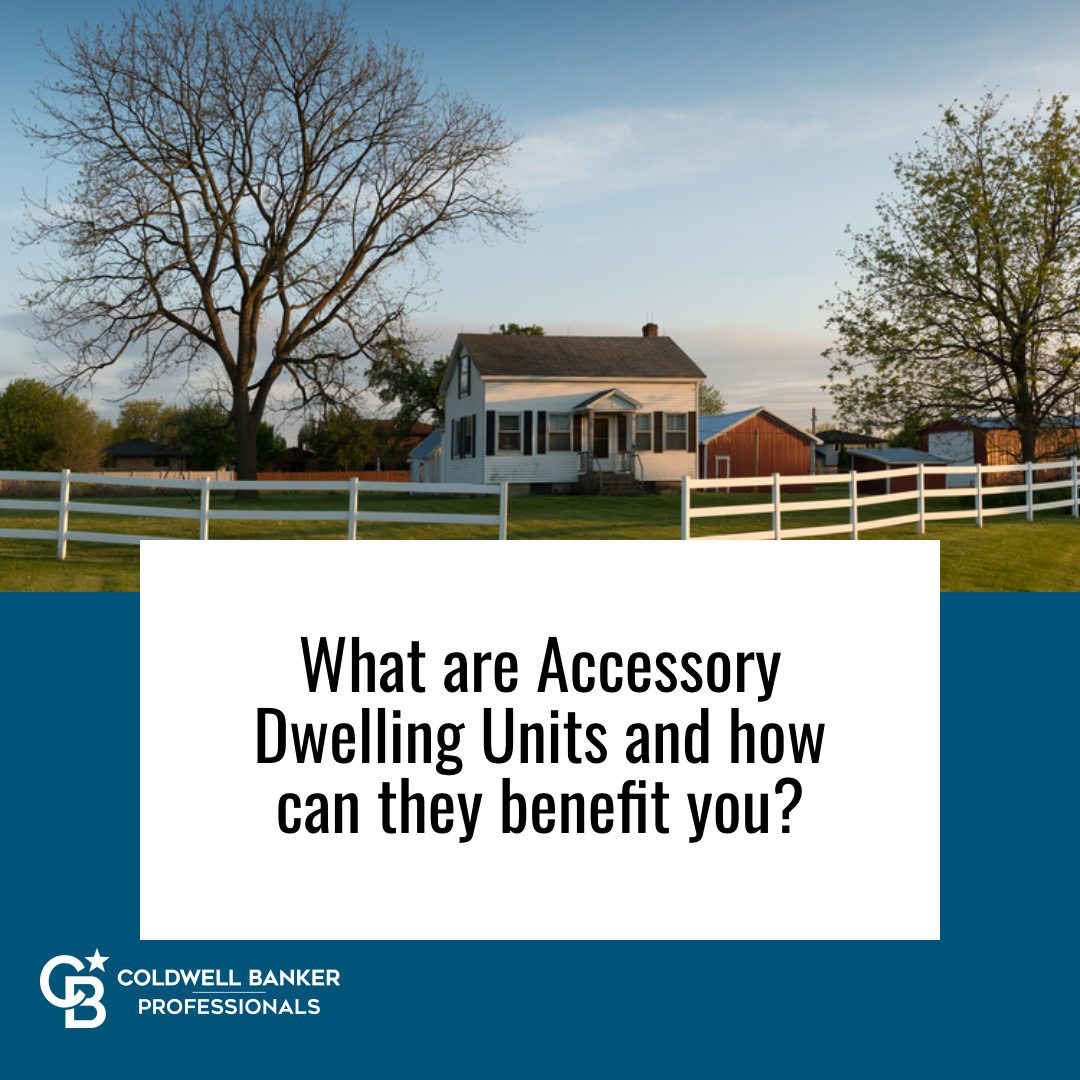
What Are Accessory Dwelling Units and How Can They Benefit You?

Maybe you’re in the market for a home and are having a hard time finding the right one that fits your budget. Or perhaps you’re already a homeowner in need of extra income or a place for loved ones. Whether as a potential homebuyer or a homeowner with changing needs, accessory dwelling units, or ADUs for short, may be able to help you reach your goals.
What Is an ADU?
As AARP says:
“An ADU is a small residence that shares a single-family lot with a larger, primary dwelling.”
“An ADU is an independent, self-contained living space with a kitchen or kitchenette, bathroom and sleeping area.”
“An ADU can be located within, attached to, or detached from the main residence. It can be created out of an existing structure (such as a garage) or built anew.”
If you’re thinking about whether an ADU makes sense for you as a buyer or a homeowner, here’s some useful information and benefits that ADUs can provide. Keep in mind, that regulations for ADUs vary based on where you live, so lean on a local real estate professional for more information.
The Benefits of ADUs
Freddie Mac and the AARP identify some of the best features of ADUs for both buyers and homeowners:
- Living Close by, But Still Separate: ADUs allow loved ones to live together while having separate spaces. That means you can enjoy each other’s company and help each other out with things like childcare, but also have privacy when needed. If this appeals to you, you may want to consider buying a home with an ADU or adding an ADU onto your house. According to Freddie Mac:
“Having an accessory dwelling unit on an existing property has become a popular way for homeowners to offer independent living space to family members.”
- Aging in Place: Similarly, ADUs allow older people to be close to loved ones who can help them if they need it as they age. It gives them the best of both worlds – independence and support from loved ones. For example, if your parents are getting older and you want them nearby, you may want to buy a home with an ADU or build one onto your existing house.
- Affordable To Build: Since ADUs are often on the smaller side, they’re typically less expensive to build than larger, standalone homes. Building one can also increase your property’s value.
- Generating Additional Income: If you own a home with an ADU or if you build an ADU on your land, it can help generate rental income you could use toward your own mortgage payments. It’s worth noting that because an ADU exists on a single-family lot as a secondary dwelling, it typically cannot be sold separately from the primary residence. But that’s changing in some states. Work with a professional to understand your options.
These are a few of the reasons why many people who benefit from ADUs think they’re a good idea. As Scott Wild, SVP of Consulting at John Burns Research, says:
“It’s gone from a small niche in the market to really a much more impactful part of new housing.”
Bottom Line
ADUs have some great advantages for buyers and homeowners alike. If you’re interested, reach out to a real estate professional who can help you understand local codes and regulations for this type of housing and what’s available in your market.
Are You a Homebuyer Worried About Climate Risks?

The increasing effects of natural disasters are leading to new obstacles in residential real estate. As a recent article from CoreLogic explains:
“As the specter of climate change looms large, the world braces for unprecedented challenges. In the world of real estate, one of those challenges will be the effects of natural catastrophes on property portfolios, homeowners, and communities.”
That may be why, according to Zillow, more and more Americans now consider how climate risks and natural disasters can impact their homeownership plans (see below):

This study goes on to explain that climate risks affect where many people look for a home. That’s because homebuyers are interested in finding out if the house they want will be exposed to things like floods, extreme heat, and wildfires.
If you’re in the same situation and are thinking about what to do next, here’s some important information to consider as you start looking for a home.
Expert Advice for Homebuyers To Reduce Climate Risks
The first thing to do is understand how to go about buying a home while thinking about climate risks. With the right help and resources, you can simplify the process.
The Mortgage Reports provides these tips for buying your next home:
- Evaluate climate risks: Before buying a home, it’s important to check if it’s in a flood-prone area using the FEMA website, review the seller’s property disclosure for any past damage, and get an inspection for issues like cracks and mold to make sure it’s a safe investment.
- Consider future preventative maintenance costs: For areas that get tropical storms, you may need to purchase hurricane shutters and sandbags to protect the home. In wildfire-prone areas, you may want to clear plants five feet from the house, consider rooftop sprinklers, or possibly buy gutter guards to prevent fire hazards. Factor these future expenses in when touring homes that may need them.
- Take steps to avoid losing your assets: Getting the right insurance for a home in a high-risk climate area is crucial. You should shop around and talk to multiple insurance agents to compare prices and options before deciding to bid on a home.
Above all else, your most valuable resource during this process is a trusted real estate expert. They’ll always focus on your goals while keeping your concerns top of mind. Even if they don’t have all the answers about how your home can handle natural disasters, they can connect you with the right experts and information.
Bottom Line
If you want to buy a home, but you’re also thinking about climate risks, you’re not alone. Your home is a big investment, and if anything can impact that, you want to know. Let’s connect so you have someone you can trust to guide you as you find your next home.
Are You a Homebuyer Worried About Climate Risks?

The increasing effects of natural disasters are leading to new obstacles in residential real estate. As a recent article from CoreLogic explains:
“As the specter of climate change looms large, the world braces for unprecedented challenges. In the world of real estate, one of those challenges will be the effects of natural catastrophes on property portfolios, homeowners, and communities.”
That may be why, according to Zillow, more and more Americans now consider how climate risks and natural disasters can impact their homeownership plans (see below):
This study goes on to explain that climate risks affect where many people look for a home. That’s because homebuyers are interested in finding out if the house they want will be exposed to things like floods, extreme heat, and wildfires.
If you’re in the same situation and are thinking about what to do next, here’s some important information to consider as you start looking for a home.
Expert Advice for Homebuyers To Reduce Climate Risks
The first thing to do is understand how to go about buying a home while thinking about climate risks. With the right help and resources, you can simplify the process.
The Mortgage Reports provides these tips for buying your next home:
- Evaluate climate risks: Before buying a home, it’s important to check if it’s in a flood-prone area using the FEMA website, review the seller’s property disclosure for any past damage, and get an inspection for issues like cracks and mold to make sure it’s a safe investment.
- Consider future preventative maintenance costs: For areas that get tropical storms, you may need to purchase hurricane shutters and sandbags to protect the home. In wildfire-prone areas, you may want to clear plants five feet from the house, consider rooftop sprinklers, or possibly buy gutter guards to prevent fire hazards. Factor these future expenses in when touring homes that may need them.
- Take steps to avoid losing your assets: Getting the right insurance for a home in a high-risk climate area is crucial. You should shop around and talk to multiple insurance agents to compare prices and options before deciding to bid on a home.
Above all else, your most valuable resource during this process is a trusted real estate expert. They’ll always focus on your goals while keeping your concerns top of mind. Even if they don’t have all the answers about how your home can handle natural disasters, they can connect you with the right experts and information.
Bottom Line
If you want to buy a home, but you’re also thinking about climate risks, you’re not alone. Your home is a big investment, and if anything can impact that, you want to know. Let’s connect so you have someone you can trust to guide you as you find your next home.
Why Today’s Housing Inventory Shows a Crash Isn’t on the Horizon
You might remember the housing crash in 2008, even if you didn’t own a home at the time. If you’re worried there’s going to be a repeat of what happened back then, there’s good news – the housing market now is different from 2008.
One important reason is there aren’t enough homes for sale. That means there’s an undersupply, not an oversupply like the last time. For the market to crash, there would have to be too many houses for sale, but the data doesn’t show that happening.
Housing supply comes from three main sources:
- Homeowners deciding to sell their houses
- Newly built homes
- Distressed properties (foreclosures or short sales)
Here’s a closer look at today’s housing inventory to understand why this isn’t like 2008.
Homeowners Deciding To Sell Their Houses
Although housing supply did grow compared to last year, it’s still low. The current months’ supply is below the norm. The graph below shows this more clearly. If you look at the latest data (shown in green), compared to 2008 (shown in red), there’s only about a third of that available inventory today.
So, what does this mean? There just aren’t enough homes available to make home values drop. To have a repeat of 2008, there’d need to be a lot more people selling their houses with very few buyers, and that’s not happening right now.
Newly Built Homes
People are also talking a lot about what’s going on with newly built houses these days, and that might make you wonder if homebuilders are overdoing it. The graph below shows the number of new houses built over the last 52 years:
The 14 years of underbuilding (shown in red) is a big part of the reason why inventory is so low today. Basically, builders haven’t been building enough homes for years now and that’s created a significant deficit in supply.
While the final blue bar on the graph shows that’s ramping up and is on pace to hit the long-term average again, it won’t suddenly create an oversupply. That’s because there’s too much of a gap to make up. Plus, builders are being intentional about not overbuilding homes like they did during the bubble.
Distressed Properties (Foreclosures and Short Sales)
The last place inventory can come from is distressed properties, including short sales and foreclosures. Back during the housing crisis, there was a flood of foreclosures due to lending standards that allowed many people to get a home loan they couldn’t truly afford.
Today, lending standards are much tighter, resulting in more qualified buyers and far fewer foreclosures. The graph below uses data from the Federal Reserve to show how things have changed since the housing crash:
This graph illustrates, as lending standards got tighter and buyers were more qualified, the number of foreclosures started to go down. And in 2020 and 2021, the combination of a moratorium on foreclosures and the forbearance program helped prevent a repeat of the wave of foreclosures we saw back around 2008.
The forbearance program was a game changer, giving homeowners options for things like loan deferrals and modifications they didn’t have before. And data on the success of that program shows four out of every five homeowners coming out of forbearance are either paid in full or have worked out a repayment plan to avoid foreclosure. These are a few of the biggest reasons there won’t be a wave of foreclosures coming to the market.
What This Means for You
Inventory levels aren’t anywhere near where they’d need to be for prices to drop significantly and the housing market to crash. According to Bankrate, that isn’t going to change anytime soon, especially considering buyer demand is still strong:
“This ongoing lack of inventory explains why many buyers still have little choice but to bid up prices. And it also indicates that the supply-and-demand equation simply won’t allow a price crash in the near future.”
Bottom Line
The market doesn’t have enough available homes for a repeat of the 2008 housing crisis – and there’s nothing that suggests that will change anytime soon. That’s why housing inventory tells us there’s no crash on the horizon.